Switcher rises from the ashes in Bulle
Posted by on July 22, 202624 Heures, Nicolas Pinguely, July 22, 2026
The famous Swiss manufacturer of ethical and eco-friendly T-shirts is reopening a store in French-speaking Switzerland, ten years after its bankruptcy.
In brief:
- Switcher is opening a store in Bulle, ten years after its bankruptcy.
- The brand is aiming for 5 million in revenue this year.
- Competing with Shein and Zara, Switcher focuses on sustainable basics at fair prices.
Ten years after going bankrupt, Switcher is making a comeback in French-speaking Switzerland. The famous brand with the yellow whale logo is opening a new store in Bulle (FR). This resurgence is sparking a touch of nostalgia and quite a few questions in a textile market that has been upended by Chinese ultra-fast fashion and online retail.
The company, which was relaunched in 2020 with the help of Indian investors, is cautiously expanding its operations. Switcher recently opened two stores on the other side of the Sarine River, in Winterthur and Rheinfelden, respectively. “These stores are proving to be a great success,” says Marc Joss, CEO of Switcher. Today, the company is aiming for revenue of around 5 million francs this year. In the past, its revenue had reached 20 million.
Fifty percent online
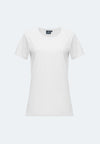
Currently, the company generates just under 50% of its sales online, with the remainder coming from its partner network of multi-brand and sports stores. Its famous Bob T-shirt, which the brand promotes as a product made with respect for workers and the environment, remains the flagship item in its catalog.
Marc Joss, CEO of Switcher, plans to open stores in Geneva and Lausanne by 2028.
But how can the company survive in the face of fast-fashion giants and Chinese powerhouses such as Shein and Temu? For Marc Joss, the answer lies in a positioning that is diametrically opposed to theirs. Switcher is banking on its traditional strength: high-quality products at a fair price, both environmentally and qualitatively sustainable.
Uniqlo as a Model
The director notes with some bitterness that the ethical and responsible mindset of the customer base—built up over a quarter-century—has rapidly eroded in the face of inflation. However, all is not lost. Marc Joss cites the Japanese giant Uniqlo as a model in this area, proving that there is “a genuine market for high-quality basics.”
This view is shared by Julien Kolly, co-founder of the marketing agency Donuts. He believes that Switcher has real potential for a comeback, provided it adheres to strict standards regarding value for money. “There’s a market to be tapped, with high-quality, fashionable basics made from genuine organic cotton priced at 19 francs, as Switcher offers,” the expert points out.
A Brand That's Very Much Alive
The other major challenge will be to show that the brand is very much alive. On the digital front, Julien Kolly recommends stepping up social media campaigns, with a particular focus on people over 40—the very same people who wore these T-shirts in the 2000s. Switcher is working on this. “On Facebook, we reach our target audience of people in their 40s, 50s, and older, but we’re also active on Instagram to reach a younger audience,” explains Marc Joss.
To support the opening of their stores, another boost would be needed to drive sales. “Switcher would be wise to put up some signage where they’re opening, just like McDonald’s or Burger King, because that helps establish the brand locally and makes it easier for people to find their way there,” emphasizes Julien Kolly. The marketing expert suggests running a campaign “with signs in high-traffic areas, such as the train stations in Fribourg or Bulle.”
One Day in Lausanne and Geneva
So much for the strategy. Switcher refuses to give in to delusions of grandeur. The rollout in French-speaking Switzerland is expected to take place in stages. Nothing is planned this year in Lausanne, Geneva, Neuchâtel, or Sion. The CEO takes a pragmatic approach: “We need to take stock of what we’ve just done and focus on stabilizing the three stores we’ve opened.”
However, plans for the Lake Geneva region have not been shelved. ““We have projects on the table in Geneva and Lausanne, but they’re looking toward 2027–2028,” reveals Marc Joss, noting that patience is required since each new location requires substantial investments, estimated at “between 50,000 and 60,000 francs, financed internally.” In other words, Bulle will serve as a test bed for future developments.